Blog
Incarcerated Veterans
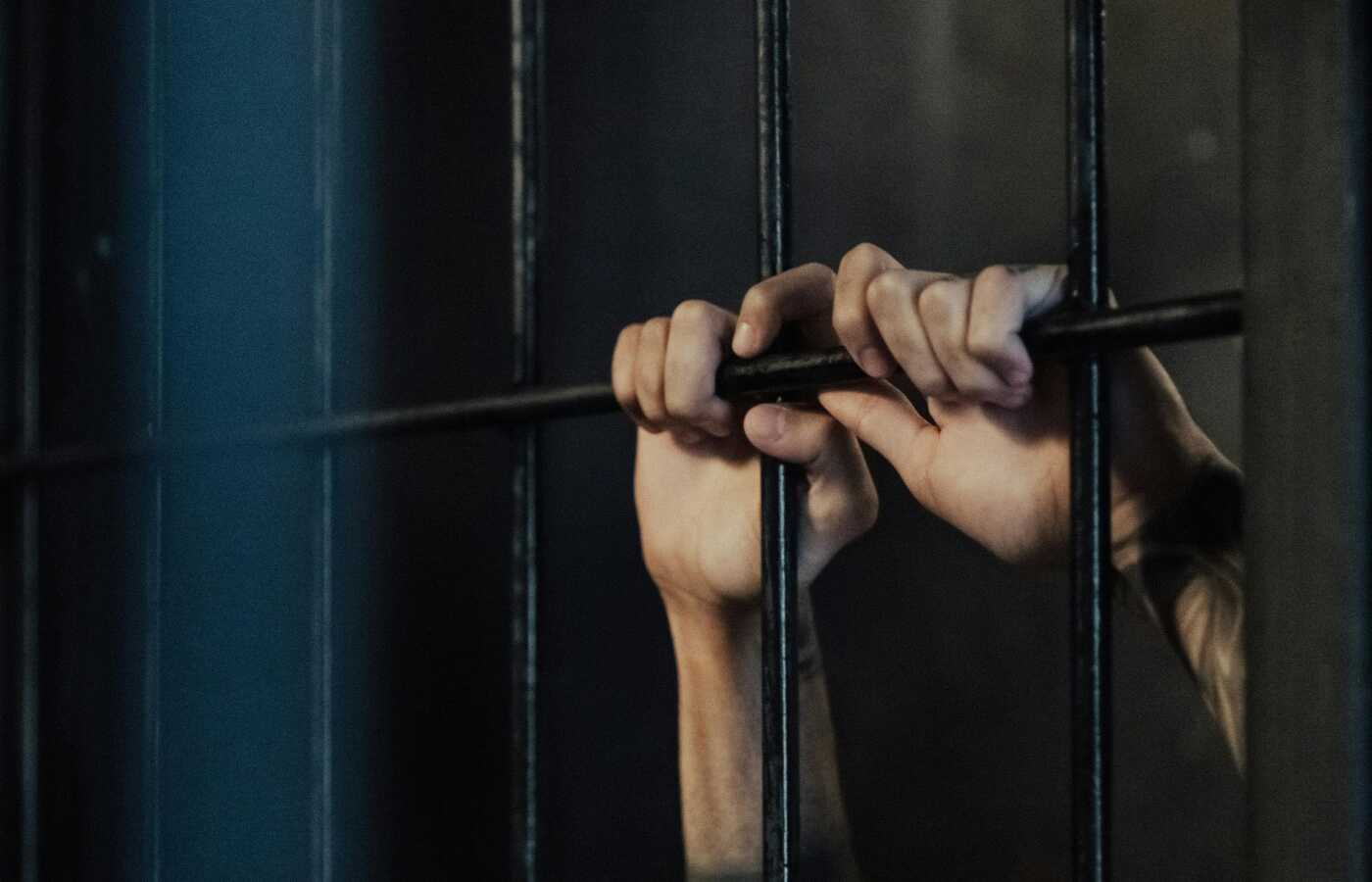
Despite comprising less than seven percent of the United States’ adult population, veterans make up over eight percent of the incarcerated population within United States jails and prisons.[1] While this number is alarming, it almost certainly underrepresents the true scale of veteran incarceration, given the failure of institutions to accurately identify and track veterans within the system.[2] In fact, veterans are twice as likely to experience a period of incarceration as the nonveteran and civilian population, with a third of veterans having reported being arrested at least once in their lives.[3][4] In 1981, not long after the Vietnam War ended, the Department of Justice published its first study on incarcerated veterans. The report, led by a formerly incarcerated Vietnam veteran, found that nearly one in four people in state prisons had once served in the military. In federal prisons, about one in five incarcerated individuals was a veteran.[5]
The incarceration of American veterans following military service is not a new phenomenon, though the theories explaining its causes have evolved significantly over time. In 1946, a publication titled “Is a Crime Wave Coming?” speculated that, as more than ten million servicemen returned home from World War II, the United States might experience a surge in crime. Its author, criminologist Thorsten Sellin, like many researchers today, linked post-service criminality to combat exposure. However, unlike modern theories that emphasize post-traumatic stress disorder (PTSD) and related mental health conditions, Sellin attributed veterans’ criminal behavior to economic and social factors. He cited the concerns of “many people” who argued that “millions of men have been trained in the use of deadly weapons; that they have become calloused to pain and brutality, hardened to personal danger, and inured to killing by their war experiences. They take it for granted that many of these soldiers will find it easier, when they return to civilian life, to go looking for easy money with a gun than to settle down to a humdrum life of hard work.”[6]
Today, such an assumption may seem outlandish, but a closer look at the historical understanding of combat’s psychological toll, and the lack of mental health support available to returning servicemembers, reveals how it emerged. While the effects of combat and the reality of PTSD are widely recognized today, this was not always the case. PTSD was first formally identified as a distinct psychiatric diagnosis in the Diagnostic and Statistical Manual of Mental Disorders (DSM-III) in 1980, just one year before the Department of Justice published its first report on incarcerated veterans.[7] Prior to this recognition, what we now classify as PTSD was described under several different terms. During World War I, it was called “shell shock”; in World War II, it evolved into “combat stress reaction” or “battle fatigue.” For the Vietnam generation, clinicians often referred to the condition as “post-Vietnam syndrome,” describing symptoms such as “acute onset flashbacks to Vietnam.”[8][9]
Despite the formal recognition of PTSD and the expansion of mental health services tailored for combat veterans, the United States continues to experience a troubling rate of veteran incarceration. Since the inception of the war on drugs, the number of veterans incarcerated in prison has more than doubled between the conclusion of the Vietnam War and the September 11th attacks.[10] A 2016 Department of Justice study estimated that approximately 107,400 veterans were serving time in state or federal prisons. Of this population, nearly one in four male veterans in state custody (twenty-eight percent) and one in five in federal custody (twenty-one percent) had served in combat, roughly 11,800 of whom were Vietnam War veterans.[11] However, the emergence of Veterans Treatment Courts (VTCs), alternative sentencing programs, and post-conviction remedies offers a potential pathway to reduce the number of veterans entering and remaining within the criminal justice system as a result of trauma stemming from their military service.
In response to the growing number of veterans appearing in criminal courts with untreated PTSD, substance use disorders, and other service-related issues, the nation’s first Veterans Treatment Court (VTC) was established in Buffalo, New York, on January 4, 2008. Judge Robert Russell created the court after observing that many veterans in his drug and mental health dockets were struggling with addiction and mental illness.[12] The Buffalo VTC’s early success, grounded in a model that paired treatment with accountability, sparked a nationwide movement. Within two years, more than twenty VTCs had opened across the country, aided by Judge Russell and the Bureau of Justice Assistance (BJA), which helped train other jurisdictions to replicate the model.[13] The U.S. Department of Justice began providing dedicated funding for these courts in 2013, signaling bipartisan support for alternatives to incarceration for veterans. By 2020, Congress had enacted the Veterans Treatment Court Coordination Act of 2019, directing the Attorney General to establish a federal grant program for VTCs. Since the first court’s founding in 2008, more than 600 Veterans Treatment Courts have been established nationwide.[14]
However, despite their success and nationwide expansion, participation in Veterans Treatment Courts (VTCs) remains limited. Most programs restrict eligibility to minor, nonviolent offenses, and a recent analysis found that only ten to fifteen percent of justice-involved veterans are able to access a VTC. As of December 2023, just fifteen percent of U.S. counties had an operational VTC, and eight states had none at all.[15] Veterans who enter the criminal justice system in such jurisdictions are denied access to an alternative that both honors their service and addresses the invisible wounds of war. Moreover, many VTCs, like the prisons and jails they aim to divert veterans from, often fail to identify eligible participants adequately. There also remains significant inconsistency across jurisdictions in the service requirements necessary for admission to a VTC or related diversion program. For instance, some VTCs may have stipulations that a veteran has served in combat to be eligible, which may disregard a multitude of factors that can also impact a servicemember, such as training accidents, traumatic brain injury, or military sexual trauma. Additionally, some VTC classifications consider only those who served on active duty, thereby possibly excluding those who served in the reserves or National Guard from eligibility.
Outside VTCs, some states have enacted statutes and various legislation that provide alternative sentencing for eligible veteran defendants, allowing courts to sentence such defendants to diversion programs, treatment, or probation rather than incarceration.[16][17] It is important to note that such statutes often simply allow courts the discretion in making sentencing determinations, with the defendant's service-connected mental health conditions being weighed against the circumstances of the offense. While such legislation undoubtedly provides many veterans with relief and often much-needed treatment, several factors may be left unconsidered. For instance, as referenced in Cal. Penal Code § 1170.9., Traumatic Brain Injury is one factor courts can consider in sentencing. As our understanding of TBIs continues to expand, it has become evident that many military specialties and occupations are predisposed to TBI, often unbeknownst to the servicemember, with symptoms potentially going undetected for years.[18][19][20] As a result, a justice-impacted veteran may not know they are suffering from TBI, let alone have medical records to reflect their condition.[21] Further complicating things, many mental health conditions, injuries, and trauma, including Military Sexual Trauma, go unreported or undocumented.
For veterans who find themselves incarcerated, one avenue for relief has emerged through various methods of post-convention relief. However, as with VTCs and alternative sentencing arrangements, this form of relief is applied inconsistently across jurisdictions, with many courts offering no such opportunity. Some states, such as Pennsylvania, have sought to increase access to post-conviction relief for veterans who have been diagnosed with trauma related to their service after they began serving a prison sentence.[22] House Bill 458, introduced by Rep. Carol Hill-Evans, would “give our veterans the fairness and compassion they deserve by making a simple update to maintain consistency in how courts sentence them, Hill-Evans said.”[23] The bill recognizes that many of these conditions go unrecognized and undetected. In a statement regarding the intent of the bill, Rep Hill-Evans stated, “Veterans are allowed to present PTSD and TBI as mitigating factors during their sentencing for a crime, so it only makes sense to allow veterans who were later diagnosed after their incarceration [1] began to introduce this new information. These are men and women who served our country honorably, and it’s not uncommon for their trauma to go unrecognized or untreated for months or years, and certainly conceivable at the time of their trial or plea.”
The notion of granting leniency to our nation's veterans is perhaps best captured in the Supreme Court's decision in Porter v. McCollum, 558 U.S. 30 (2009). In their decision, the Court observed, “Our nation has a long tradition of according leniency to veterans in recognition of their service, especially for those who fought on the front lines.”[24] However, only three weeks earlier, the same Court may have unintentionally demonstrated the legal system's failure to grasp the administrative and bureaucratic hurdles that veterans often face. When Robert Van Hook, a veteran sentenced to death, brought a habeas corpus petition asserting ineffective assistance of counsel, his claim relied in part on his belief that his attorneys waited until the last minute to seek information related to his mental health and military service that could have provided mitigation during his trial and subsequent sentencing.[25] In evaluating his claim, the Court found that by seeking Mr. Van Hook’s record from the Veterans Administration seven weeks before his trial, “the Sixth Circuit, in short, was simply incorrect in saying Van Hook's lawyers waited until the 'last minute.’”[26] For those who have not attempted to request records from the VA, it may be difficult to understand why seven weeks would not be sufficient to fulfill such a request. At the time of this writing (December 2025), veterans seeking service treatment records can expect to wait several weeks to several months, with some requests taking a year or more.[27][28] Now consider that this is the anticipated timeframe of the computer age, when Mr. Van Hook’s records were sought in the 1980s, the Veterans Administration was a very different organization, and so were the wait times.
While further understanding of PTSD, TBI, MST, and other issues veterans face has spurred efforts to create courts responsive to their unique needs, the majority of veterans are not diverted to Veterans Treatment Courts or diversion programs, remaining trapped in the criminal justice system. As the shortcomings of these programs are beginning to be recognized, it is critical that states and the federal government continue to expand their efforts to assist not only service members as they first enter the criminal system, but also those veterans who are currently incarcerated. By redefining eligibility, expanding relief options, and intervening before a crime occurs, our legal system can honor those who have risked their lives to serve our nation.
[1] Stephanie Brooks Holliday, Lynsay Ayer & Lauren Skrabala, Identifying Promising Prevention Strategies and Interventions to Support Justice-Involved Veterans: Veterans’ Issues in Focus, RAND Corp., Perspective No. PEA1363-8 (June 2023), https://www.rand.org/pubs/perspectives/PEA1363-8.html
[2] Council on Criminal Justice, National Panel Says Justice System Fails to Consistently Identify Veterans and Steer Them Away From Incarceration (Press Release, Mar. 2024), https://counciloncj.org/national-panel-says-justice-system-fails-to-consistently-identify-veterans-and-steer-them-away-from-incarceration/
[3] Laura M. Maruschak, Jennifer Bronson & Mariel Alper, Veterans in Prison: Survey of Prison Inmates, 2016, U.S. Dep’t of Justice, Bureau of Justice Statistics, NCJ 252646 (Mar. 2021), https://bjs.ojp.gov/content/pub/pdf/vpspi16st.pdf
[4] Sonner Kehrt, “‘Consequences of War’—Veterans Incarcerated at Higher Rates and Face Longer Sentences,” The War Horse (Apr. 18, 2024), https://thewarhorse.org/military-veterans-incarcerated-at-higher-rates-lack-support/
[5] Sonner Kehrt, “‘Consequences of War’—Veterans Incarcerated at Higher Rates and Face Longer Sentences,” The War Horse (Apr. 18, 2024), https://thewarhorse.org/military-veterans-incarcerated-at-higher-rates-lack-support/
[6] Thorsten Sellin, GI Roundtable 3: Is a Crime Wave Coming? (Jan. 1946), in Annals, American Academy of Political and Social Science (Editor, Annals, American Academy of Politics & Social Science) (1946), https://www.historians.org/resource/gi-roundtable-3-is-a-crime-wave-coming-1946.
[7] U.S. Dep’t of Veterans Affairs, Nat’l Ctr. for PTSD, PTSD History and Overview (2024), https://www.ptsd.va.gov/professional/treat/essentials/history_ptsd.asp
[8] U.S. Dep’t of Veterans Affairs, Nat’l Ctr. for PTSD, History of PTSD in Veterans: Civil War to DSM-5 (2024), https://www.ptsd.va.gov/understand/what/history_ptsd.asp
[9] Marisol Dominguez-Ruiz; Kyle Virgien; & Corene Kendrick, Our Veterans Need Support, Not Incarceration, ACLU Nat’l Prison Project (Nov. 11, 2022), https://www.aclu.org/news/prisoners-rights/our-veterans-need-support-not-incarceration
[10] Jason Higgins, Prisoners after War: Veterans in the Age of Mass Incarceration xi (Univ. of Mass. Press 2024).
[11] Maruschak et al., Veterans in Prison.
[12] U.S. White House, Office of National Drug Control Policy, Veterans Treatment Courts Fact Sheet (Dec. 13, 2010), https://obamawhitehouse.archives.gov/sites/default/files/ondcp/Fact_Sheets/veterans_treatment_courts_fact_sheet_12-13-10.pdf
[13] U.S. Dep’t of Justice, Office of Justice Programs, Bureau of Justice Assistance, Veterans Treatment Court Program: Overview (last modified Sept. 16, 2025), https://bja.ojp.gov/program/veterans-treatment-court-program/overview
[14] U.S. Dep’t of Veterans Affairs, Homeless Programs Office, Veterans Treatment Courts and Other Veteran-Focused Courts Served by VA Veterans Justice Outreach Specialists: Inventory Update Fact Sheet (Jan. 2021), https://www.va.gov/HOMELESS/docs/VJO/Veterans-Treatment-Court-Inventormuch-neededtreatmentmuch-neededlegislationservice-connecteddefendant'sy-Update-Fact-Sheet-Jan-2021.pdf
[15] Nat’l Conf. of State Legislatures, Justice-Involved Veterans: Honoring Service and Advancing Public Safety (Oct. 22, 2024), https://www.ncsl.org/military-and-veterans-affairs/justice-involved-veterans-honoring-service-and-advancing-public-safety
[16] Cal. Penal Code § 1170.9.
[17] Minn. Stat. § 609.115, subd. 10(a) (2024)
[18] Dave Philipps, Defense Bill Includes New Measures on Blast-Related Brain Injuries, N.Y. Times (Dec. 18, 2024), https://www.nytimes.com/2024/12/18/us/defense-bill-brain-injury-blast.html
[19] Zolan Kanno-Youngs & Helene Cooper, Rocket Launcher Blast Injuries Prompt New Focus on Brain Trauma in Military, N.Y. Times (Nov. 26, 2023), https://www.nytimes.com/2023/11/26/us/military-brain-injury-rocket-launcher.html
[20] Concussion Alliance, Brain Injury Associated With U.S. Military Training Weapons, Concussion Alliance Blog (May 23, 2024), https://www.concussionalliance.org/blog/brain-injury-associated-with-us-military-training-weapons
[21] Zolan Kanno-Youngs & Helene Cooper, Blast and Mortar Training Raises Concerns About Brain Injury in U.S. Military, N.Y. Times (May 2, 2024), https://www.nytimes.com/2024/05/02/us/blast-mortar-brain-injury-military.html
[22] State Rep. Malcolm Kenyatta & State Rep. Nina T. Ahmad, Pennsylvania House News Release, PA House of Representatives (May 15, 2024), https://www.pahouse.com/Hill-Evans/InTheNews/NewsRelease/?id=141459
[23] Id.
[24] Porter v. McCollum, 558 U.S. 30, 43 (2009).
[25] Bobby v. Van Hook, 558 U.S. 4, 10 (2009).
[26] Id.
[27] Vets National, How Do Veterans Obtain Their Service Treatment Records? (June 3, 2024), https://vetsnational.com/blog/how-do-veterans-obtain-their-service-treatment-records/
[28] As of July 2026, the Author has waited 16 months for a response regarding a FOIA request for his own military medical records.